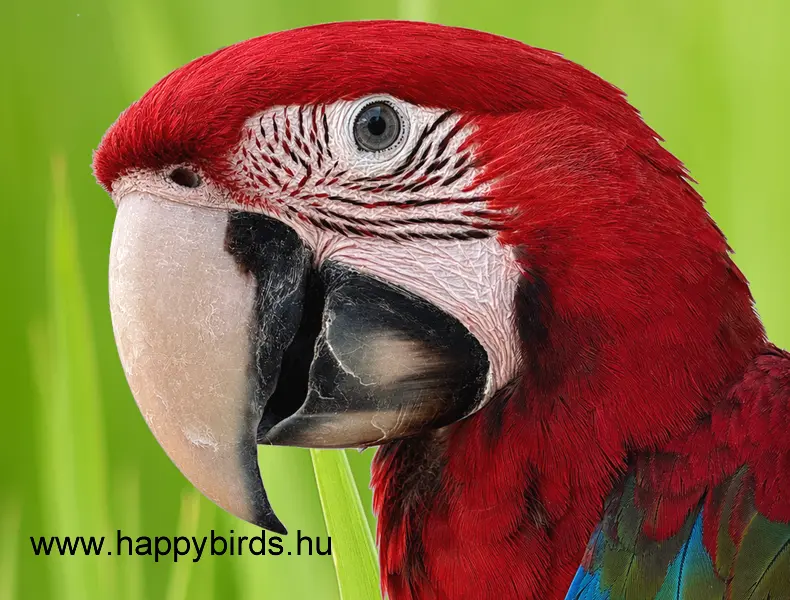
Proper parrot housing & nutrition – What you should know for healthy birds
Housing and mindful nutrition directly affect parrots’ health, behavior, and lifespan. In this section, I’ve collected the basic principles and the most common mistakes.
Why is proper nutrition so important?
Proper nutrition is crucial for parrots’ health and longevity, because their diet directly influences vitality, immune function, and behavior. Parrots are very sensitive to nutritional deficiencies, since in the wild they follow a highly varied diet. If they don’t receive the necessary vitamins, minerals, and nutrients in the right proportions in captivity, deficiency-related illnesses can develop. Good nutrition also directly affects breeding condition: an underfed bird, or one suffering from deficiencies, cannot reproduce successfully. During breeding the body is under extra strain, so it’s worth paying even more attention to vitamin support and providing plentiful, high-quality food.
Species-specific factors: where does the species come from?
When it comes to both housing and feeding, always consider where the species originates. What kinds of foods can it access there? What fruits grow in that region, and what is the climate like? For example, the budgerigar spread so rapidly because in nature it feeds mainly on the seeds of just a few grass species. This is also why captive breeding could be successful even with a less diverse diet.
Common mistake: misleading seed mixes and “labels”
Hobby keepers often run into the same trap: shop staff may not know the difference, and some store-bought seed mixes on big-chain shelves come with misleading labels. The result? People take home a mix that simply isn’t right for their parrot. A blend “recommended for cockatiels” gets sold as a “large parrot mix”, yet it’s packed with a wildly unbalanced amount of sunflower seeds. Meanwhile, the very same brand may also recommend it for lovebirds. There’s a reason reputable manufacturers make truly species-specific mixes. It’s worth choosing the best-fitting one — or mixing your own. And don’t forget: what season is your bird in? (breeding, resting, or pet companion) And how much space does it live in? (a cage or an aviary) These factors should guide how you adjust the mix. A bird kept in a smaller space is more prone to weight gain, so feeding fewer oily seeds is usually the smarter choice.
Proper nutrition for lovebirds
The foundation of a lovebird’s (Agapornis species) diet is a high-quality, varied seed mix — but seed + water alone is not enough. The goal of good feeding is to keep your bird in great condition, prevent obesity, and provide enough vitamins, minerals, and fiber.
Recommended seed mix ingredients: red millet, yellow millet, white millet, oats, safflower, canary seed, buckwheat, striped sunflower seeds, niger seed, hemp seed. Overdoing fatty seeds (sunflower, hemp, niger) can easily lead to weight gain. This is especially important for pet lovebirds, because a bird kept in a cage moves less — so a high-fat diet will cause extra weight much faster.
Soft food: besides seeds, offer soft food (e.g., egg food), plus a variety of vegetables (e.g., carrot, bell pepper, broccoli, zucchini, pumpkin, leafy greens). They can have fruit too, but only in moderation due to the higher sugar content.
Weeds and greens (from pesticide-free places only): chickweed, dandelion leaves/flowers, plantain, sprouted seeds. These naturally boost fiber and micronutrient intake — and many birds absolutely love the “foraging and grazing” experience.
Important: always provide fresh drinking water. In summer, remove soft food after a few hours so it doesn’t spoil.
Things to avoid: avocado, onions and related alliums, heavily salted/sugary human foods. For treats, offer millet spray — or just a few “richer” seeds.
Pyrrhura species nutrition
Pyrrhura parrots (for example Pyrrhura molinae, Pyrrhura rupicola) are incredibly active, curious, and the type that wants to “taste-test” everything. With them, a good diet isn’t just about body condition: it affects feather quality, digestion, energy levels — and even behavior. The goal is for the seed mix to be the base, but daily fresh foods are what create real balance.
Main seed mix (the one we use as well): red millet, yellow millet, white millet, safflower, oats, striped sunflower seeds, white sunflower seeds, buckwheat, canary seed, unhulled rice, hemp seed, niger seed, red sorghum.
Fatty seeds in moderation: sunflower, hemp, and niger seeds are valuable energy sources, but in high proportions they can quickly lead to obesity, especially if the bird flies less or gets lots of treats. If you notice your pyrrhura eating only the sunflower seeds, it’s worth reducing them and balancing the menu with more fresh foods and sprouted seeds.
Daily fresh foods: for Pyrrhuras, vegetables, fruit, and various safe greens/weeds are especially important, because they support digestion and help your bird feel “full” — so fewer fatty seeds get eaten. Great options include: carrot, bell pepper, broccoli, cauliflower, zucchini, cucumber, pumpkin, fresh leafy greens (e.g., dandelion, chickweed, shepherd’s purse). Fruit is fine too, but more as a side note (e.g., apple, pear, berries), because too much fruit sugar can throw the balance off.
Sprouting: pyrrhuras love sprouted seeds, and it’s a great “bridge” between dry seed and fresh foods. Sprouts are easier to digest and add variety. Just make sure they’re prepared hygienically and served fresh, because they spoil quickly.
Soft food and extra protein: during molting, for young birds, or in the breeding season, a good-quality soft food can be very helpful, supporting feather growth and recovery. In the resting season, however, it shouldn’t dominate — too much “power food” can mean unnecessary extra energy and weight gain.
Things to avoid: avocado, onions and related alliums, heavily salted/sugary human foods. For rewards, a little millet, a few sunflower seeds, or a favorite fruit bite are great choices.
Proper nutrition for galahs cockatoo
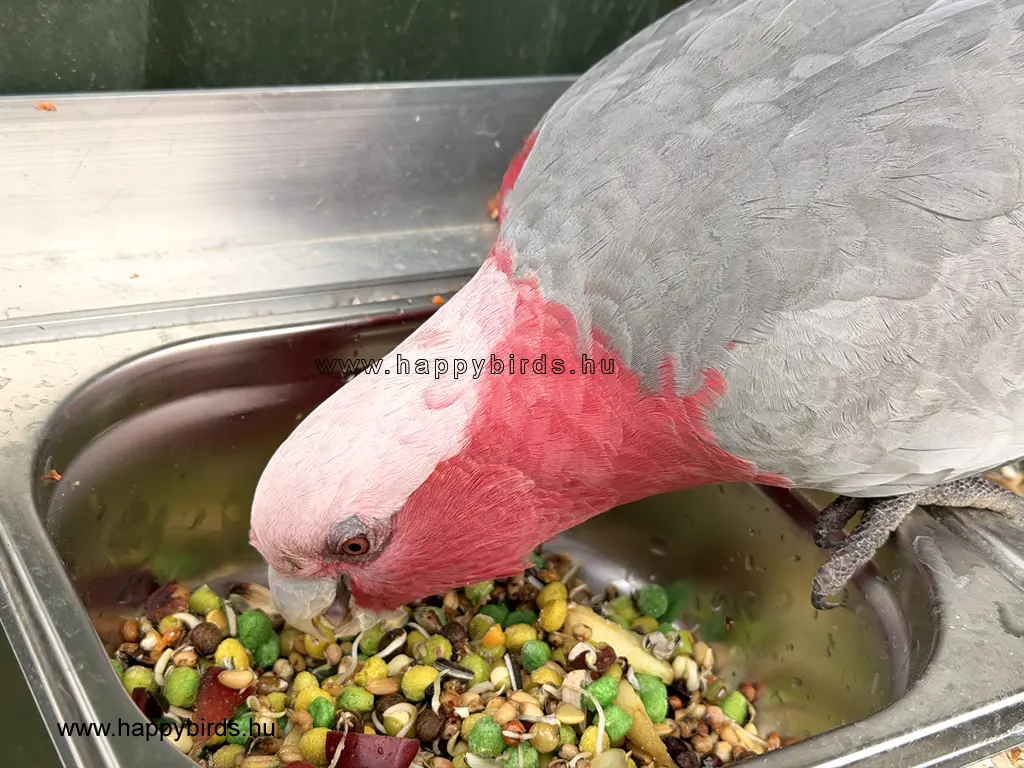 The galah cockatoo (Eolophus roseicapilla) is an incredibly intelligent, playful, and “good-appetite” species.
The key goal in feeding is good condition and stable body weight, because cockatoos — especially as pets —
can gain weight easily if they get too many fatty seeds or overly energy-dense treats.
With them, “less is sometimes more”: a lighter, higher-fiber, more veggie-based diet often leads to better feathering,
improved well-being, and more balanced behavior.
The galah cockatoo (Eolophus roseicapilla) is an incredibly intelligent, playful, and “good-appetite” species.
The key goal in feeding is good condition and stable body weight, because cockatoos — especially as pets —
can gain weight easily if they get too many fatty seeds or overly energy-dense treats.
With them, “less is sometimes more”: a lighter, higher-fiber, more veggie-based diet often leads to better feathering,
improved well-being, and more balanced behavior.
Base: a lighter seed mix / lower fat: millets, oats, smaller seeds, and grains work well in a cockatoo diet. Fatty seeds like sunflower and “nutty” mixes should be extras only, not the foundation. Some galahs love to pick out the “good stuff”, so it helps to structure feeding so they can’t spend the whole day living on the fatty bits.
Soft foods (especially important for cockatoos): let vegetables be the core of the soft-food portion. Great options include: carrot, bell pepper, broccoli, cauliflower, zucchini, cucumber, pumpkin, celery, plus leafy greens (e.g., lamb’s lettuce, chickweed). Fruit can be offered, but only in moderation (e.g., apple, pear, berries), because too much sugar + too little movement can quickly turn into weight issues.
Fiber and the “grazing” style: in the wild, cockatoos often forage on the ground and graze, so many birds do really well with greens, weeds, and sprouts. From pesticide-free areas you can offer, for example: dandelion leaves/flowers, plantain, and sprouted seeds. These can also help reduce cravings for fatty seeds.
Treats and training: galahs learn fast, so rewards are super useful — but it’s also easy to overdo them. Richer seeds (sunflower, hemp) are best as training rewards in small daily amounts. A favorite veggie bite or a little millet spray can be a great alternative.
If you’re unsure about a food, it’s safer to skip it.
Proper nutrition for macaws
Macaws (for example Ara ararauna, Ara chloropterus) are large, intelligent, and highly active parrots. Their diet shouldn’t just be “filling” — it needs to be nutrient-rich and varied.
Base: a quality seed mix (for large parrots): most major manufacturers offer species-specific mixes for both large macaws and mini-macaws.
Daily fresh food: for macaws too, vegetables should be the “backbone” of the fresh portion. Great options include: carrot, bell pepper, broccoli, cauliflower, zucchini, cucumber, celery, pumpkin, plus leafy greens (e.g., dandelion, chickweed, shepherd’s purse). They can have fruit as well, but in moderation (e.g., apple, pear, berries), because too much sugar isn’t ideal — especially if a lot of seeds are eaten alongside it.
Nuts and “hard treats”: macaws have powerful beaks and love crunchy, crack-and-chew foods. That’s excellent mental enrichment — but the ratio still matters. Almonds, walnuts, hazelnuts and similar treats are best as a few pieces per day as rewards or enrichment, not served unlimited in a bowl.
Sprouting: many macaws enjoy sprouted seeds. They’re great for variety and extra fiber. During the breeding season and while raising chicks, they’re almost essential.
Pellets: we also use pellets as a supplemental food for both mini-macaws and larger macaws. Dry pellets can be an excellent complete diet option, too.
How much seed mix is enough—and why shouldn’t the bowl always be “full”?
Even after choosing what you believe is the best mix for your bird, you still shouldn’t offer too much of it. In mixes for larger species there may be 15–20 different seeds. If you always refill with fresh food, birds will first pick out the easiest seeds to hull (often sunflower) and ignore the rest, because they get full quickly. At the next feeding they receive a new portion and the cycle repeats. It’s better to offer an amount that stays available long enough for them to also eat the smaller, harder-to-hull seeds.
Beyond seeds, vegetables, fruits, and soft foods are also essential. No matter how expensive or nutrient-dense a seed mix is, parrots still need other foods. Common species like budgies and cockatiels often prefer grasses and leafy plants and may eat fewer fruits. In contrast, lineolated parakeets and other small South American species often enjoy fruit as well. Sprouted seeds are an important part of a varied diet because they are easier to digest and much richer in vitamins, enzymes, and minerals than dry seeds. They’re especially helpful for young birds’ development and play a key role during the breeding season.
How to safely sprout a seed mix for parrots
Besides a suitable seed mix, soft food is also important for parrots. Sprouted seeds are richer in vitamins and enzymes, easier to digest, and for many species they noticeably improve appetite. The key is hygiene and regular rinsing—if you follow a few steps, it’s not difficult to prepare. See how we do it!

Why is sprouting useful?
Seeds contain their highest levels of enzymes, vitamins, and minerals during germination, so it’s worth using them in this form to enrich your birds’ diet—daily when encouraging breeding condition and during breeding/chick rearing as well. If you don’t intend to breed and simply want to provide a more varied diet, offering sprouted seeds once or twice a week is enough. It’s also recommended for fledglings as they become independent, because they can eat and digest sprouted seeds more easily than hard, dry seeds. Sprouted seeds are especially useful in winter, when fresh greens are harder to find.
Tools and hygiene – what should you watch for?

Many people are cautious about sprouting because it can seem complicated at first, but if you follow a few basic steps, you won’t get any unpleasant surprises. You can try almost any seed, but the most common ones are (wheat, oats, sunflower, corn, mung beans, etc.). You don’t need expensive tools either—one of the simplest methods is using a glass jar with holes in the lid. With this method, make sure the seeds don’t dry out, and also prevent mold. If you notice any mold, don’t take chances: throw it out and start over.
During sprouting you must rinse the seeds regularly (at least 2–3 times per day is recommended), keep them moist, and avoid standing water. The plastic sprouting tray shown on the left is available in organic shops and in many supermarkets as well. I use one like this too. It’s easier to keep the seeds clean and it ventilates well. When sprouting, never place the tray in a window or next to a radiator where it can dry out quickly. It’s better to keep it in a place away from direct light and heat.
Sprouting steps
(Shown with wheat, but the process and timing are similar with other seeds.)
- First, soak the seeds for 8–12 hours. I use about twice as much water, because the seeds will swell.
- After about 8 hours, rinse the seeds thoroughly. From this point on, don’t leave them sitting in water—keep them moist (no standing water).
- After one day, the first sprouts appear. Rinse thoroughly again.
- After two days, the sprouts are more visible (often 5–10 mm). This is a good time to feed.
- On the third day, the main shoot begins to develop.
- By the fourth day, the shoot can reach close to 10 mm in length.
Photos: sprout development (from 24 hours to 6–7 days)
Click the images to see the time point of sprout development in the description.


Other seeds, sprouted


Soft food ideas using sprouted seeds
By enriching sprouted seeds with various fruits and vegetables, you can make an excellent soft food for your birds. It provides proper mineral and nutrient intake when preparing for breeding, during chick rearing, or even during the resting period.
Click the images to see the ingredient list in the description


What can a parrot eat? Safe and unsafe fruits & vegetables
With safe feeding, the question isn’t “what will they eat,” but “what is truly okay long-term.” Here’s a quick list of safe fruits/vegetables and the most important restrictions/warnings.
Important: prohibited or risky foods
Not every fruit or vegetable that is safe for humans is safe for parrots! For example, AVOCADO is toxic, and even lettuce can be risky (due to pesticide residues). Never offer these in any form. It’s also a good idea to remove the core and seeds from apples and pears.
Safe list (fruits, vegetables, grasses/greens)
Safe: tropical fruits (lemon, mandarin, orange, pineapple, kiwi, banana, etc.).
Local fruits (apple, pear, sweet cherry, sour cherry, raspberry, currant, blackberry, plum, peach, strawberry, etc.).
It’s best to remove pits from stone fruits.
Vegetables: carrot, broccoli, corn, peas, beans, pumpkin/squash, bell pepper, beetroot, hot chili pepper (has antibacterial effects).
Of course, wash all fruits and vegetables thoroughly.
Also safe: various grasses and wild greens such as shepherd’s purse, chickweed, dandelion, chamomile, etc.
Collectable greens and grasses:


If these plants are unfamiliar to your bird, it may suddenly eat a lot of them and develop mild diarrhea or looser droppings. Introduce them gradually in small amounts. Otherwise, these foods can be offered daily. When collecting plants, be careful: avoid areas where the plants may be contaminated or where pesticides may have been used.
Warning! Toxic plant – ivy-leaved speedwell

Important! Ivy-leaved speedwell is toxic. If you’re not very familiar with chickweed, young shoots can be easily confused.
Growing spray millet (tip)

If you’re up for it, you can also grow spray millet for your birds. In early summer, when the weather is warmer, I scatter the seeds in rows in freshly turned soil. If you can buy nice, healthy spray millet, it’s perfect as seed for planting. Store-bought seeds should be just as viable! Once the shoots emerge, it’s worth thinning them. If you don’t, they’ll grow too densely, resulting in small, weak seed heads.
Setting up the cage or aviary
The goal of the setup is safety, comfortable space to move, and healthy foot support. Perches (and their shape) are one of the most important points—many foot problems start here.
Perches and branches – what to avoid, and what works well?

When setting up a cage or aviary, one of the most important items is the perch. Forget store-bought plastic perches and straight, turned wooden dowels from hardware stores. They provide the same grip all the time, which can cause pressure sores on the feet. The best solution is to collect natural branches yourself. Look for different thicknesses and shapes. Choose the diameter so the bird’s foot wraps around about two-thirds of it. For a Pyrrhura-sized parrot, use branches from finger-thick up to about three-finger thick. Don’t overcrowd the cage/aviary—place branches more toward the sides so the bird can fly safely.
Things you should never (or strongly shouldn’t) put in a cage/aviary

Toxic metals: lead, zinc, copper (e.g., poor-quality carabiners, chains, bells, split rings) — can cause heavy metal poisoning.
Unknown/cheap “import” toys: paints, glues, and coatings are often not bird-safe.
Plastic, rubber, and foam that can be chewed apart: if swallowed, it can cause intestinal blockage; soft plastic pieces are especially dangerous.
Strings, threads, yarn, tassels, loose ropes: feet/neck can get tangled; may cause constriction injuries or suffocation.
Mirrors (especially for single birds): can cause behavioral issues, hormonal overdrive, and frustration.
Sandpaper perches / abrasive covers: can damage the feet and cause sores/bumblefoot.
Small “rings,” open S-hooks, weak clips: beaks, tongues, or toes can get caught.
Automatic feeder or bowl? Metal or plastic?

Why are metal food and water bowls better for parrots?
Parrots are curious birds with strong beaks—they taste and chew everything. That’s why it matters what they eat and drink from every day. In our experience, metal bowls (stainless steel) are much safer, more durable, and more hygienic than plastic options. Parrots often chew plastic, and they may swallow pieces, which can also be harmful.
Hygiene: metal is easier to keep clean
Stainless steel is non-porous, doesn’t absorb odors, and biofilm (a slimy buildup) is less likely to adhere—this is especially important for drinkers. It can handle hot-water washing and disinfection, and it doesn’t “age” the way plastic does.
Plastic automatic drinkers/feeders – why they’re not ideal for parrots
Plastic automatic drinkers often cause more problems than they solve with parrots:
They get dirty fast: while eating, parrots can easily drop seed hulls, food bits, and dust into them. Because of the narrow openings, this is less noticeable and much harder to clean perfectly.
False sense of security: “The feeder is full, so the bird must have enough food”—meanwhile seeds can get stuck and won’t dispense properly.
Summary
For parrots, a firmly mounted stainless-steel bowl is usually the better solution: easy to remove once a day, wash, and put back.
Another alternative we like to use is ceramic bowls. They’re just as easy to keep clean, and due to their weight birds can’t easily tip them over or knock them off the feeding tray.
Meet our birds
In our aviary, you can find the following species: