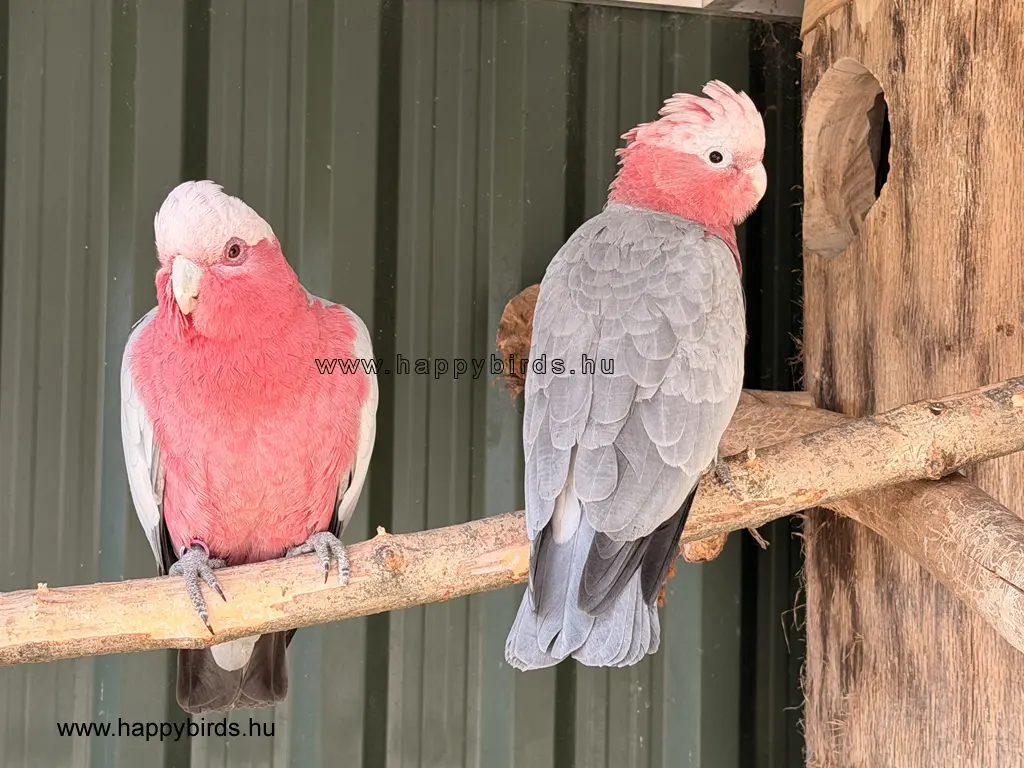
Galah Cockatoo (Eolophus roseicapilla)

The Galah (Eolophus roseicapilla) is a parrot species native to Australia and can be found across almost the entire continent. It measures around 35-40 cm in length, weighs between 300–400 grams, and has a wingspan of 50–60 cm. Its body is pink, with grey wings and tail feathers, and a white crest and crown. Galahs are often seen in pairs or large flocks of up to 100 individuals, foraging together for food. Because of their abundance, they are sometimes considered agricultural pests and are hunted for the damage they cause to crops. However, the export of wild-caught individuals from Australia is strictly prohibited.The Galah is one of the easiest cockatoo species to keep in captivity. It adapts well to new environments and readily accepts a mate — something that can be challenging with other cockatoo species. With the exception of the Cockatiel and the Galah, all other cockatoo species are listed under CITES regulations. Due to its adaptability and striking appearance, the Galah has become one of the most popular large parrot species kept by bird enthusiasts.
Today, thanks to dedicated breeding efforts, several color mutations of the Galah (Eolophus roseicapilla) exist — including Lutino, Edged, Blue, and others. Although hybridization with other cockatoo species is known, I personally do not support such crossbreeding.
Caring for and Feeding the Galah (Eolophus roseicapilla)
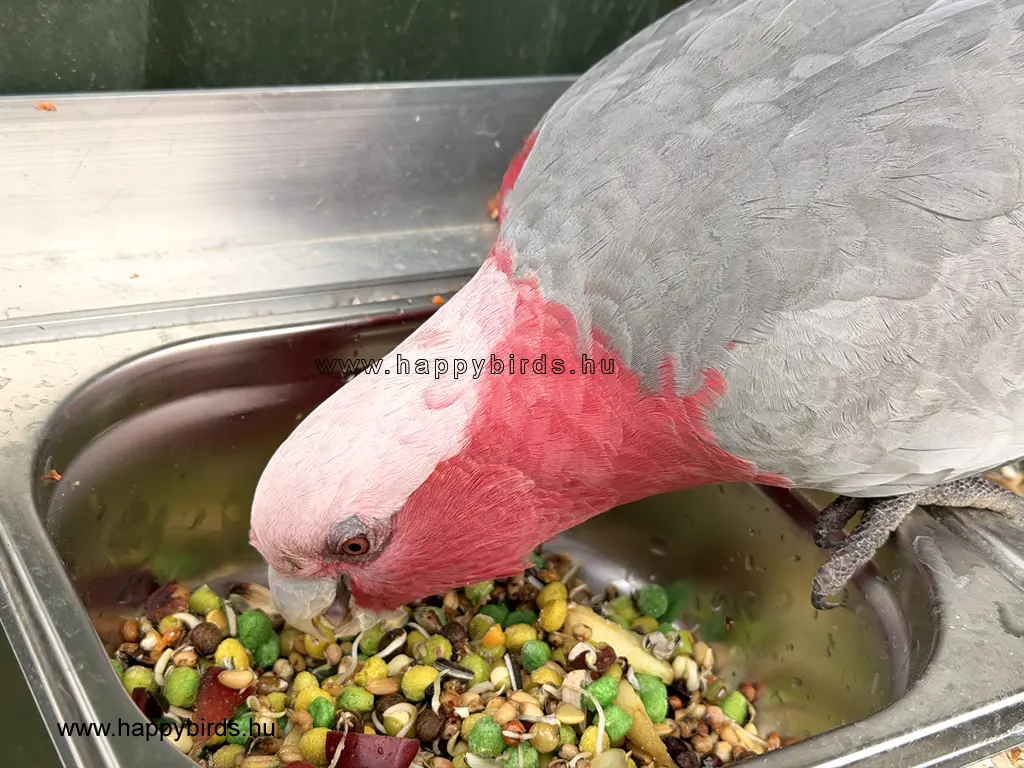
When feeding Galahs (Eolophus roseicapilla), it is essential to provide them with a specially formulated cockatoo seed mix. These birds are prone to obesity, so oily seeds should only be offered in minimal amounts. Fortunately, nearly all major bird food manufacturers offer quality blends designed specifically for cockatoos. In addition to seed mixes, they should receive fresh vegetables daily. They also enjoy seasonal wild plants such as chickweed, dandelion, and shepherd’s purse. To prevent weight gain, Galahs should ideally be kept in a spacious aviary where they can move freely. They often spend time on the ground, chewing on grass or digging in the soil. On one occasion, I even found a small 3–4 cm stone in their food bowl, brought in from the outdoor aviary! Regular deworming is particularly important for this species due to their ground-foraging behavior.
Read more →The natural habitat of the Galah (Eolophus roseicapilla) covers Australia’s drier, temperate regions, which makes the species fairly tolerant to temperature fluctuations. In Hungary, due to the increasingly mild winters of recent years, Galahs can be kept outdoors year-round — provided that the conditions are suitable. It is essential to create an environment that meets the species’ specific needs. The outdoor aviary must include a sheltered, weather-protected section against wind and rain. However, this setup is only recommended for healthy individuals in good overall condition.
Breeding the Galah (Eolophus roseicapilla)
The Galah (Eolophus roseicapilla) is one of the most popular Australian parrot species among bird enthusiasts. Its excellent adaptability, social nature, and striking appearance make it a highly sought-after companion bird. However, successful breeding requires proper knowledge, experience, and careful attention to the species’ specific needs.

Galahs (Eolophus roseicapilla) usually form long-term pair bonds, so it is best to introduce them as a pair from a young age. In captivity, the breeding season typically begins in early spring. Under natural conditions, the timing of nesting depends on climate and rainfall, as these factors influence the availability of food sources. In captivity, however, breeding activity is primarily determined by diet, nest box availability, and overall environmental conditions.
The recommended nest box size for Galahs is 30–35 cm in diameter and 50–60 cm in height, with an entrance hole of at least 10–12 cm in diameter. The female usually lays 2–5 eggs, which are incubated by both parents. During the day, the male typically sits on the eggs, while at night, the female takes over incubation duties.
Galah cockatoo Photo Gallery: