Our Parrots – macaws, Pyrrhuras and other species
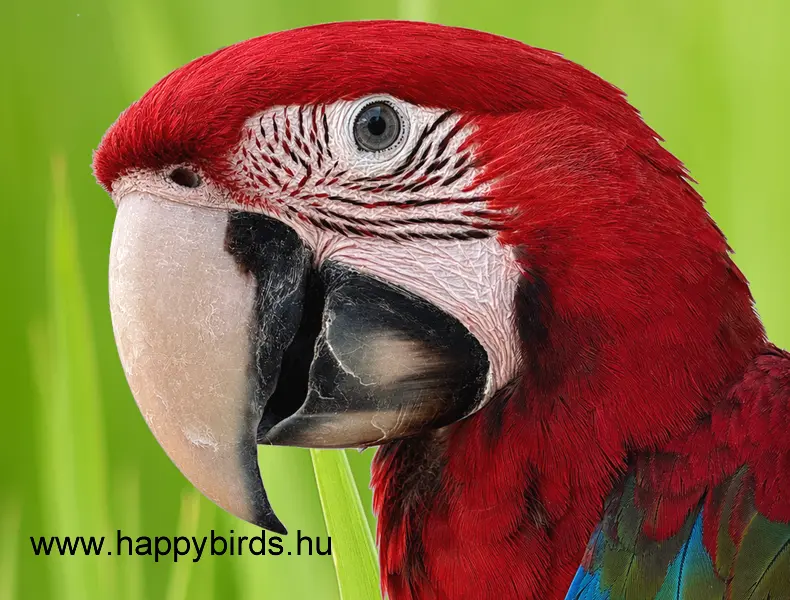
Green-winged macaw
- Size
- 90-95 cm
- Lifespan
- approx. 50–60 years
- Origin
- South America
One of the largest macaw species. An intelligent and highly social parrot, its exceptionally powerful beak enables it to crack even the hard seeds of unripe fruits in the wild. Thanks to its calmer temperament, many breeders consider it one of the most even-tempered of the large macaw species.

Blue-and-yellow Macaw
- Size
- 76-90 cm
- Lifespan
- approx. 50-60 years
- Origin
- South America
One of the most widespread and best-known large macaw species. Intelligent, highly trainable, and very social, which makes it especially popular among parrot keepers. With proper care, it can live a long life and form a strong bond with its owner.

Blue-winged Macaw
- Size
- 41–46 cm
- Lifespan
- approx. 30–40 years
- Origin
- South America
Social, affectionate birds that almost never leave their partner alone. Fun fact: in the wild, the last observed Spix’s macaw (Cyanopsitta spixii) was paired with a Blue-winged macaw.

Yellow-collared Macaw
- Size
- 35-43 cm
- Lifespan
- approx. 30-40 years
- Origin
- South America
In the wild, it is remarkably adaptable and responds well to environmental changes. Because of this, the species is considered one of the most intelligent and resourceful mini-macaws. Compared to their larger relatives, mini-macaws tend to be more energetic and active.

Blue-headed Macaw
- Size
- 40-45 cm
- Lifespan
- approx. 30–40 years
- Origin
- South America
Among the mini-macaws, this is the rarest and most mysterious species. Very little has been recorded about its behavior in its natural habitat. Compared to other macaws, its social dynamics are more reserved—calmer, quieter, and less showy. Uniquely among macaws, it is the only one with dark gray facial skin.

Galah cockatoo
- Size
- 35-40 cm
- Lifespan
- approx. 40 years
- Origin
- Australia
Because of its coloration, it is one of the most beloved cockatoo species. Compared to its relatives, it is much quieter. An active yet calm bird, it is generally not prone to stress. It loves to chew, which should definitely be taken into account when planning its enclosure.

Green-cheeked conure
- Size
- approx. 26 cm
- Lifespan
- approx. 15-20 years
- Origin
- South America
Macaw-like intelligence, boldness, and curiosity packed into a small body—that’s the Pyrrhura molinae. They’re sometimes called “mini macaws,” tame easily, and can even learn a few words. We breed them in a wide range of color mutations.

Black-capped conure
- Size
- approx. 25 cm
- Lifespan
- approx. 15-20 years
- Origin
- South America
By nature, they are social birds that require plenty of attention. Curious, yet somewhat shy by temperament. Fun fact: during the breeding season, family groups can form in the wild—another sign of just how social these birds are.

Fischer’s lovebird
- Size
- 13-15 cm
- Lifespan
- approx. 10–15 years
- Origin
- Africa
One of the most popular lovebird species among both breeders and hobby keepers. Active, lively birds, with many color mutations that have been developed through selective breeding.