Green-winged Macaw (Ara chloropterus)

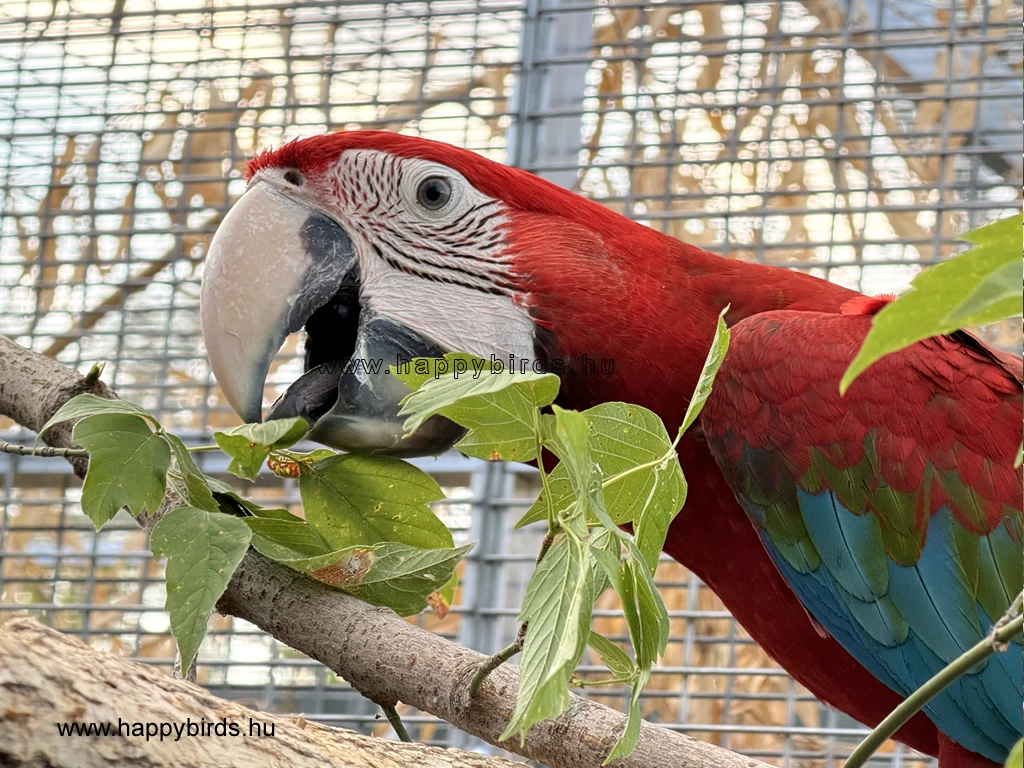
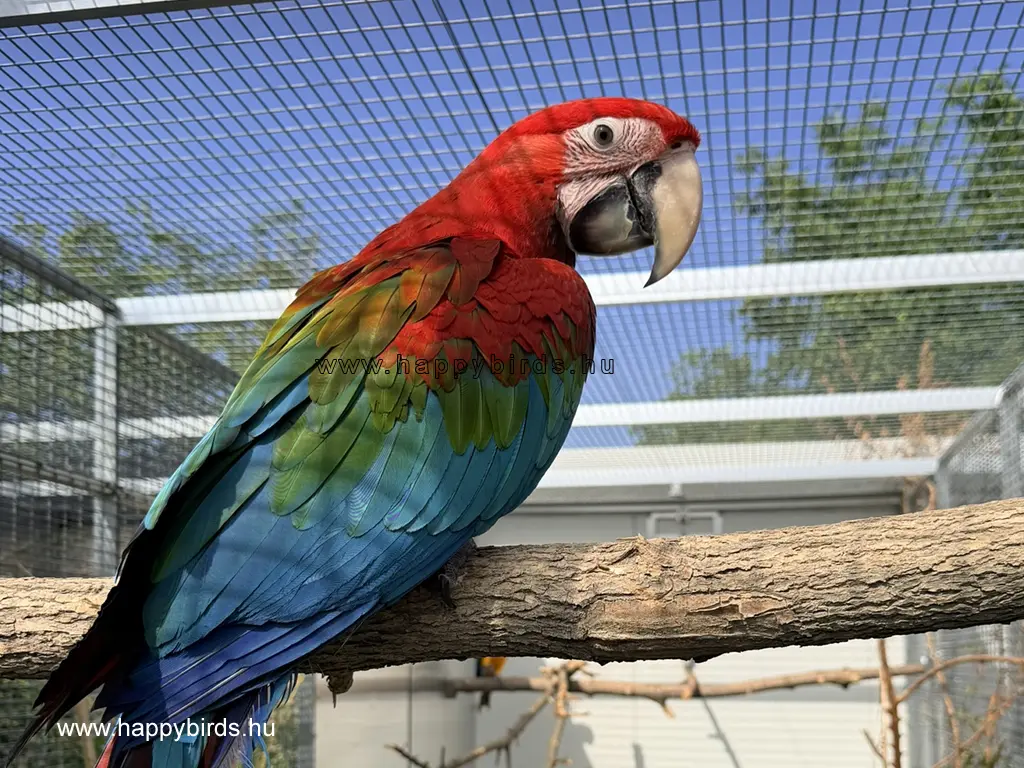
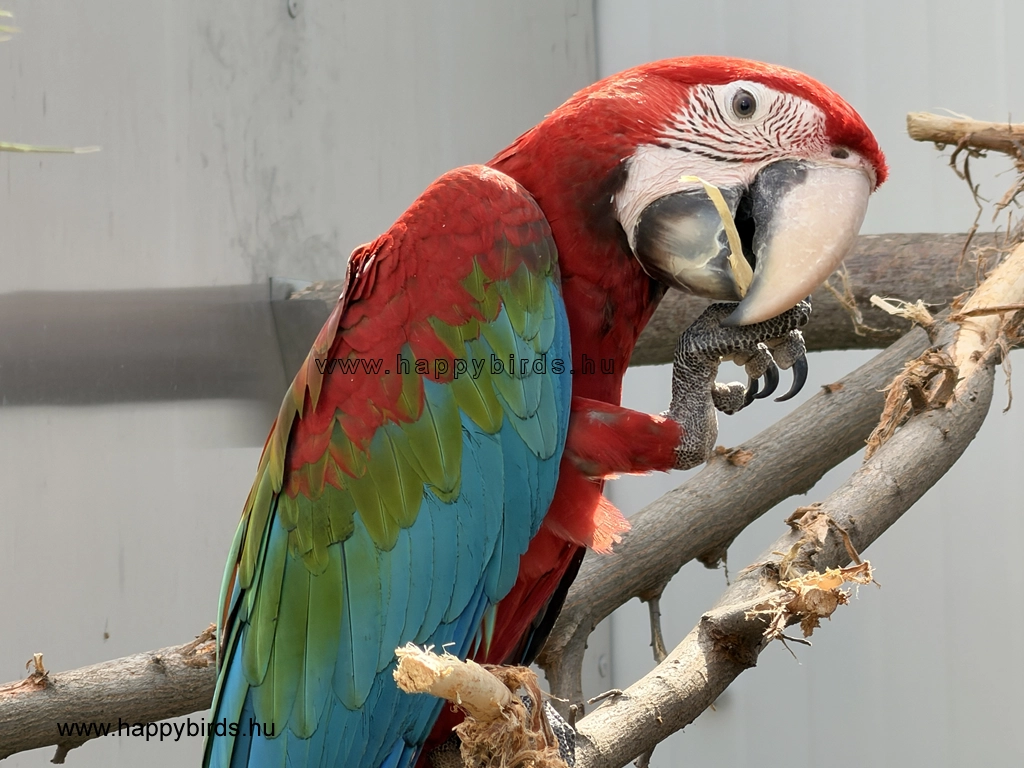
The Green-winged Macaw (Ara chloropterus) is the largest member of the Ara genus. It typically measures 90–95 cm in length and weighs between 975 and 1,450 grams. Its plumage is predominantly deep red, covering most of the head, neck, breast, abdomen and back. The lesser and median wing coverts are also red, while the greater wing coverts form a broad green band, followed by blue flight feathers toward the outer wing. The elongated central tail feathers are red, gradually blending into blue towards the tips.
Although it closely resembles the Scarlet Macaw (Ara macao), the Green-winged Macaw can be distinguished by its more robust build, proportionally larger head and more powerful beak. Its natural range extends across much of South America, where it inhabits humid tropical rainforests, riverine and gallery forests, seasonally dry forests, wooded savannas and the cerrado biome. The species is listed in CITES Appendix II.
Its robust build is matched by a confident temperament and imposing presence. In the wild, it is strongly territorial, so a person entering its aviary may occasionally provoke aggressive behaviour.
Feeding the Green-winged Macaw
Regarding its diet, it is worth noting that the Green-winged Macaw requires a somewhat more specialised diet than smaller macaw species, as nuts and other hard-shelled foods make up a significant part of its natural diet. In captivity, these can be provided through a suitable seed mixture containing various high-fat nuts and seeds, such as walnuts, hazelnuts and almonds, or with a high-quality formulated pellet diet. Tropical and other fresh fruits should also be offered daily. Fresh branches and shoots for chewing, as well as sprouted seeds, should also form part of a varied diet.
Green-winged Macaw Photo Gallery: