Foster parenting in parrot breeding – When is it necessary, and what are the risks?
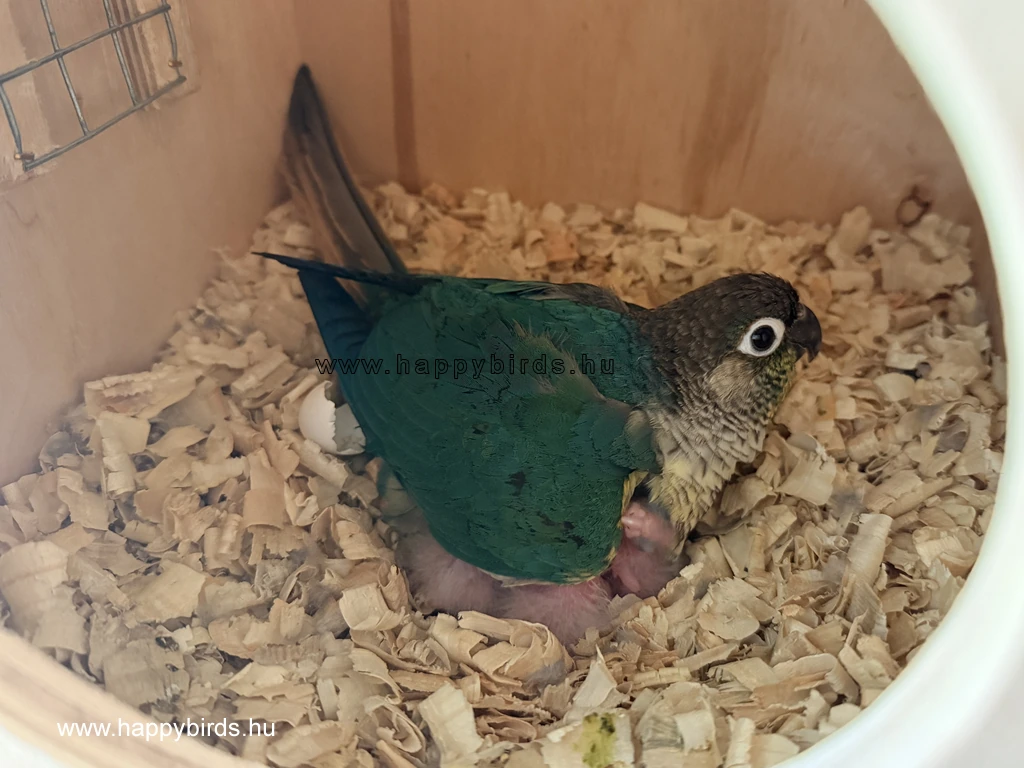
In parrot breeding, situations may arise in which an egg or chick has to be entrusted to another breeding pair instead of being left with its biological parents. This is known as foster parenting. Under the right circumstances, it can be a life-saving solution, but it should not be regarded as a simple or risk-free breeding method.
What exactly does foster parenting mean?
Foster parenting involves placing an egg or an already hatched chick in the nest box of another pair that is currently breeding. The receiving birds then incubate the eggs as their own, or feed and raise the chicks as if they were their own offspring.
The safest option is generally to foster eggs or chicks between pairs of the same species. It may also work between closely related species of similar size and with a similar rate of development, but the greater the differences between the species, the more uncertain the outcome becomes.
When may foster parenting be justified?
A large clutch does not necessarily indicate a problem. If the parents feed their young properly, chicks of different ages can often be raised successfully together. Foster parenting should therefore be considered only when there is a genuine reason to intervene.
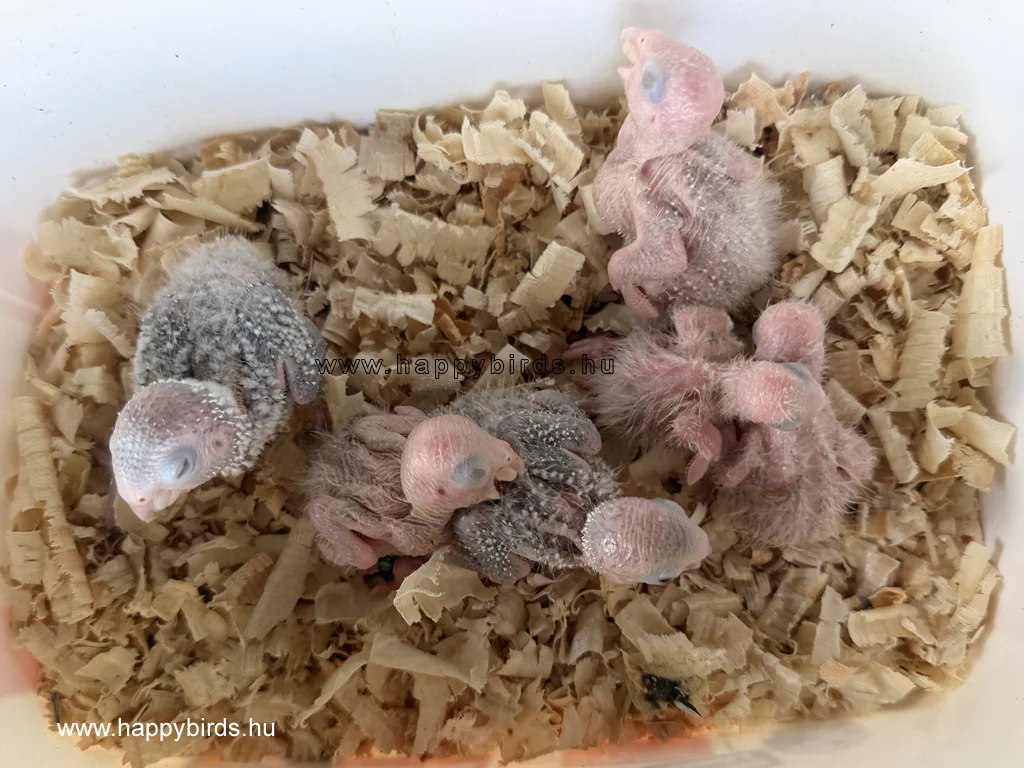
Foster parenting is most clearly justified when intervention may save an egg or chick that would otherwise be at risk.
Such situations may include:
• the parents do not incubate properly;
• they repeatedly break or damage their eggs;
• they do not feed the chicks adequately;
• one parent dies or is no longer able to take part in rearing the chicks;
• one of the parents attacks the chicks;
• the youngest chick does not receive enough food because of a substantial age difference within the brood.
Not every situation that appears unusual requires immediate intervention. In several parrot species, continuous incubation does not begin as soon as the first egg is laid, and a chick’s crop may naturally empty between feeds. A single nest-box inspection can therefore be misleading.
Regular checks, preferably carried out at approximately the same time each day, provide a more accurate picture of the chicks’ development. Warning signs may include weight loss, a persistently empty crop, a weak feeding response, chilling, dehydration or an increasingly pronounced developmental delay compared with the other chicks.
Should an egg or a chick be transferred?
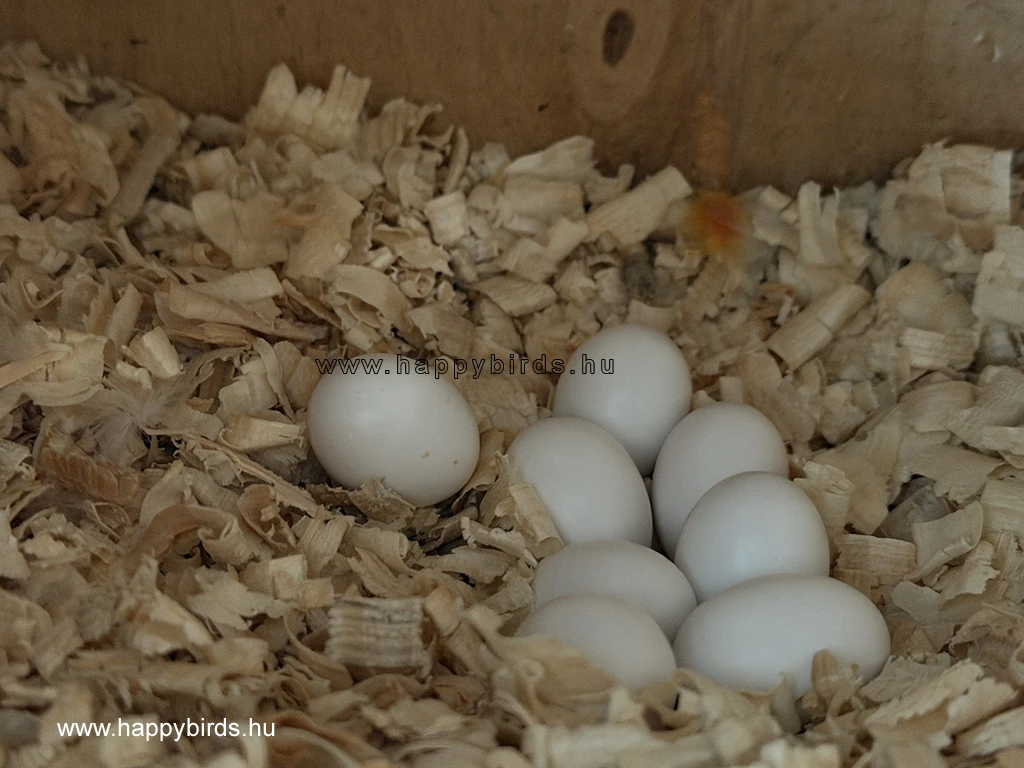
When circumstances allow, transferring an egg generally represents a smaller change for the foster pair. The egg is placed among the receiving pair’s own eggs, and the chick hatches beneath its foster parents. For this to work, the timing of the two clutches must be suitably synchronised.
When transferring an already hatched chick, similar age and stage of development are especially important. Even a difference of a few days can result in a substantial size difference in a rapidly growing parrot chick. A chick that is too small may easily be pushed aside, while a much larger newcomer may place the foster pair’s own chicks at a disadvantage.
What makes a suitable foster pair?
Not every breeding pair is suitable for foster parenting. The best choice is generally a proven pair that:
• incubates calmly and consistently;
• has successfully raised chicks before;
• tolerates regular nest-box inspections well;
• feeds its chicks properly;
• shows no aggression towards the chicks;
• is in good physical condition.
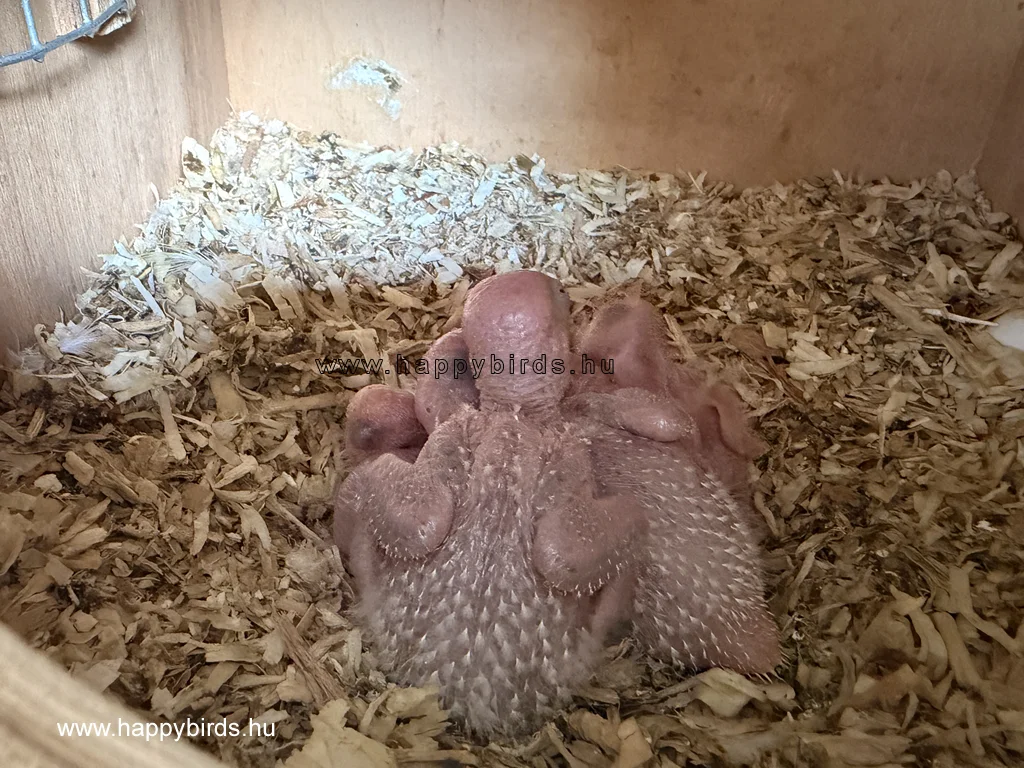
The receiving pair must not be overloaded. A pair may accept an additional chick, but this does not necessarily mean that it can successfully raise a brood that is substantially larger than usual.
Foster parenting in Pyrrhura species
Foster parenting can be used successfully with Pyrrhura species, particularly when the receiving pair is known to rear chicks reliably and the two clutches are close in timing. It is advisable to start the breeding season for the pairs at the same time so that nesting is likely to begin within a period of one or two weeks. If intervention becomes necessary, the most suitable foster parents can then be selected from several available pairs.
Foster parenting or hand-rearing?
If the biological parents can no longer raise a chick, a suitable foster pair may often provide a more natural solution than complete hand-rearing. The chick develops among other birds and has a better opportunity to learn the behaviour characteristic of its species.
If no suitable foster pair is available, however, hand-rearing may be the only realistic option.
Foster parenting does not solve every problem
If a pair repeatedly fails to incubate, breaks its eggs or does not rear its chicks properly, the underlying cause should be investigated. Possible reasons include inexperience, excessive disturbance, a poorly designed nest box, inadequate nutrition, stress, illness or a lack of compatibility between the pair.
A foster pair may save the current clutch, but it does not necessarily resolve the problem affecting the original breeding pair.
Regularly removing eggs may also encourage the female to lay again. Deliberately exploiting this response over an extended period may lead to a decline in physical condition, calcium deficiency and egg-laying-related health problems.
Attila Szőke
Parrot breeder • HappyBirds.hu
Based on our own breeding experience and professional sources.