HappyBirds.hu
Blue-and-gold macaw

Our experience with keeping and breeding Blue-and-gold macaws.

Read more
HappyBirds.hu
Pyrrhura conures

Discover our aviary. Rare colour mutations and carefully selected bloodlines.

Read more
HappyBirds.hu
Primolius maracana

Our experience with keeping and breeding Primolius maracana.

Read more
HappyBirds.hu
Primolius auricollis

Our experience with keeping and breeding Primolius auricollis.

Read more
HappyBirds.hu
Galah cockatoo

Our experience with keeping and breeding Galah cockatoos.

Read more

Parrot Quarantine – One of the Most Important Steps You Should Never Skip

Parrot kept in quarantine in a separate room with clean food and water bowls

When a new parrot arrives, it is completely natural to feel excited, watch it closely, and want to place it near your existing birds as soon as possible. But at this stage, patience is one of the most important things.

Quarantine is not unnecessary caution, and it is not distrust towards the new bird. The simple fact is that many infectious diseases are not visible right away. A parrot may look completely healthy at first glance—alert, active, with a good appetite—yet still carry pathogens that could be introduced into your existing flock. That is why, when a new bird arrives, quarantine is one of our most basic safety rules.

What does quarantine actually mean?

Many people think quarantine simply means placing the new bird in a different cage. In reality, it means much more than that. True quarantine means the newly arrived parrot is housed in a separate room, ideally without shared airspace with the other birds, and without sharing feeders, drinkers, perches or cleaning tools.

The reason is simple. Infections do not spread only through direct contact. Pathogens may also be carried through droppings, feather dust, food, drinking water, hands, clothing, and even daily routines. That is why quarantine only works if the newcomer is truly separated.
How long should a new parrot stay in quarantine?

For parrots, 30 days is generally considered the recommended minimum quarantine period. Where protecting the flock is especially important, such as in conservation programmes or valuable breeding collections, 45–60 days of observation is also common practice.

At first, this may sound like a long time, but in reality it is very short compared with the number of problems it may help prevent. A rushed introduction can have far more serious consequences than a few weeks of patient separation.

If the bird has been to an exhibition or bird fair, or if another new bird arrives in the meantime, it is worth extending the quarantine period accordingly. During the show season, quarantining parrots between events is especially important. This helps prevent diseases from being brought back to your own flock or spreading from one event to another.

Why is this so important?

Because several diseases can be present in a bird for a shorter or longer period without showing obvious signs. Some infections only become noticeable under stress, and being moved to a new environment, transported, or introduced to a different flock is already a significant source of stress for a parrot.

So a new bird may pose a risk not because it looks ill, but precisely because it appears healthy.

Which diseases may a new parrot bring in?

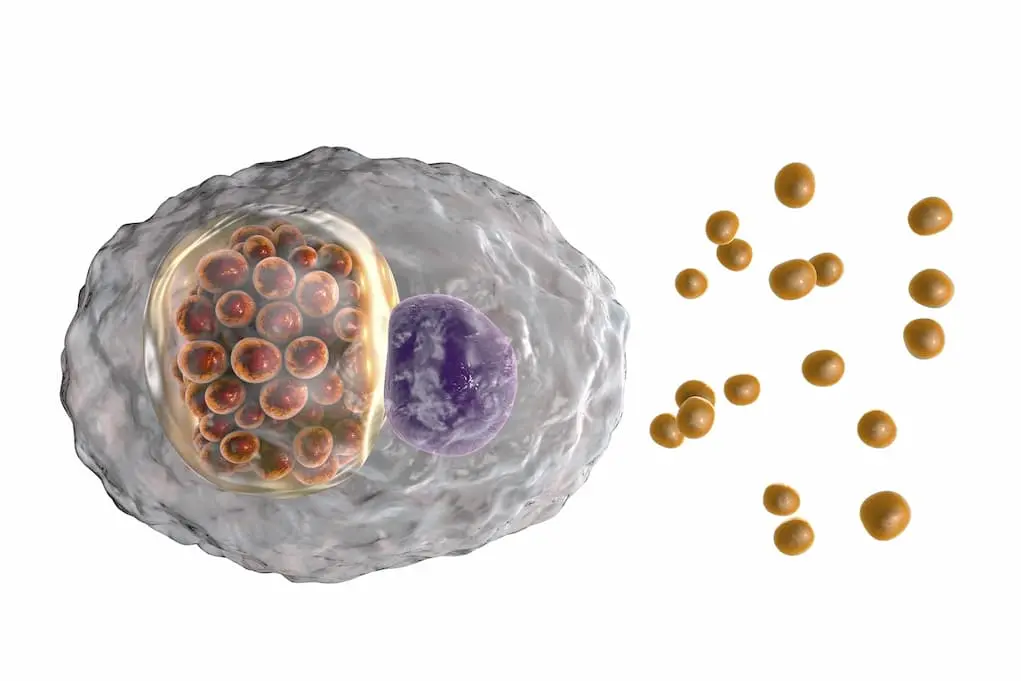
Parrot disease: chlamydiosis (psittacosis)

The most important risks include chlamydiosis (psittacosis), PBFD (psittacine beak and feather disease, a circovirus infection), polyomavirus, Pacheco’s disease, and illnesses associated with bornavirus. In addition, various internal and external parasites may also be introduced into the flock.

Several of these are especially insidious. They do not always cause obvious symptoms in the first days, and in some cases a bird may remain a carrier for a long time. That is why it is never safe to judge by appearance alone.

In our aviary, birds are periodically tested for the most common viral diseases. In the case of parrots for sale, upon request we can arrange testing for the following: PBFD – psittacine beak and feather disease (circovirus), APV (avian polyomavirus), and Chlamydophila psittaci.

Quarantine is not about sterility

The goal is not to create a sterile environment, but a consistently clean and well-controlled one.

The key is that the new bird’s area should be easy to clean, droppings and leftover food should be removed regularly, food and water bowls should be kept clean, and the quarantine tools should not be mixed with those used for the rest of the flock.

Daily routine also matters. Ideally, you should care for the long-established, healthy flock first, and only then go to the bird in quarantine. Washing your hands is essential, and where possible it is also worth changing clothes.

Quarantine is one of the most important ways we can protect our entire flock.

Share on Facebook